
New Zealand Student Visa Changes from 27 October 2026: Work Hours, English and Two Months After Your Course
Published 27/10/2026
In short: Immigration New Zealand (INZ) changed four student visa rules on 27 October 2026, and they took effect the same day. Three tighten the system and one gives students more time at the end of their course. This matters to any Indian student applying to study in New Zealand, especially for a research master's, and to the families paying for it.
What happened
INZ published the changes on its news centre on 27 October. In plain words:
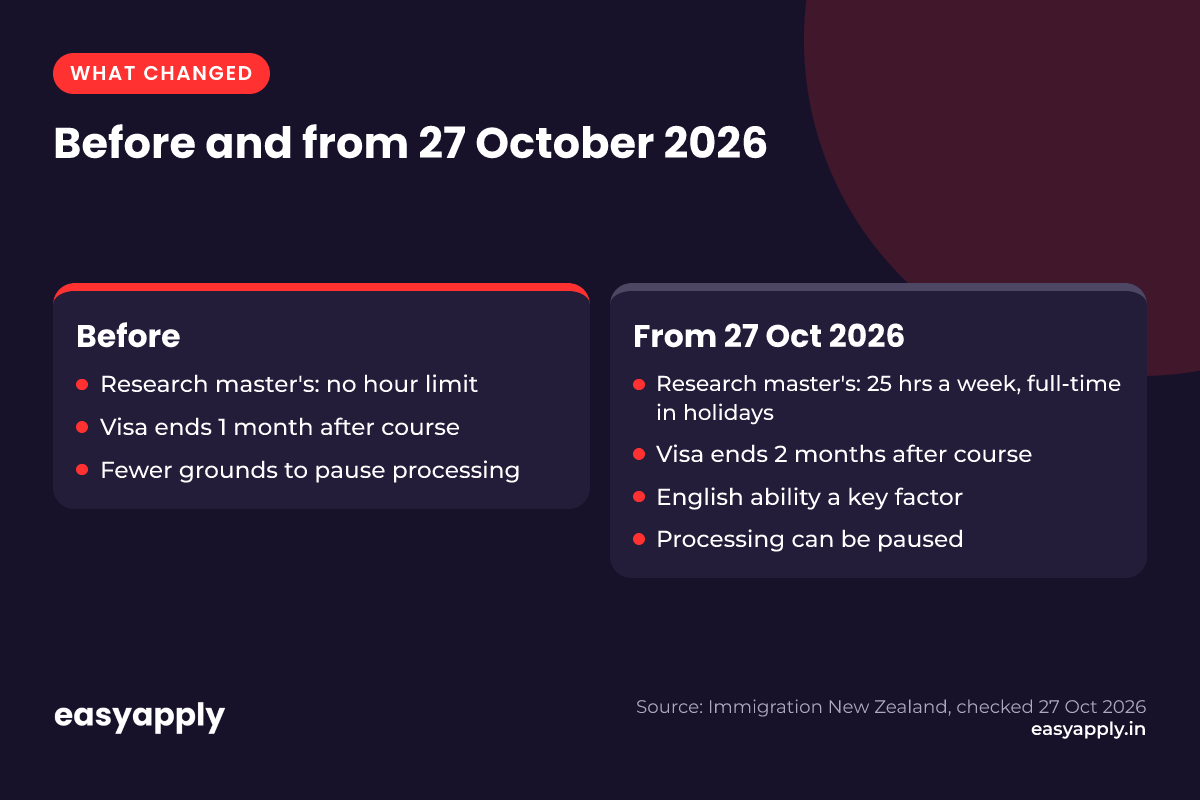
- Research master's students lose unlimited work hours. Until now, a master's-by-research student could work without an hourly limit during study. New applicants now get the same work rights as other master's students: up to 25 hours a week during study and full-time in holidays.
- English matters more. INZ's rules now say a student's English ability is a key factor in deciding whether they can meet their visa conditions.
- Processing can be paused. INZ can formally suspend student visa processing in more situations, including while it is still checking whether an education provider has broken the rules.
- More time after the course. Student visas end either on 31 March or one month after the course end date, depending on the course. That one month becomes two months. The 31 March date does not change.
INZ says the purpose of a student visa is to study, and the first three changes are meant to protect that.
For students
If you are applying for a research master's. Plan your budget on 25 hours a week, not full-time work. Do not count on part-time earnings to cover fees.
If you are doing a PhD. INZ's work page still says there is no limit on hours for students enrolled in a doctoral degree at a New Zealand tertiary institution, as long as you keep studying full-time.
If your English evidence is thin. INZ says it may ask for proof of English ability, such as IELTS or TOEFL results or a verification report for current tertiary study. Even if your university waived a test, keep a recent score or school or college certificate ready. A weak answer here can now weigh more heavily against an application.
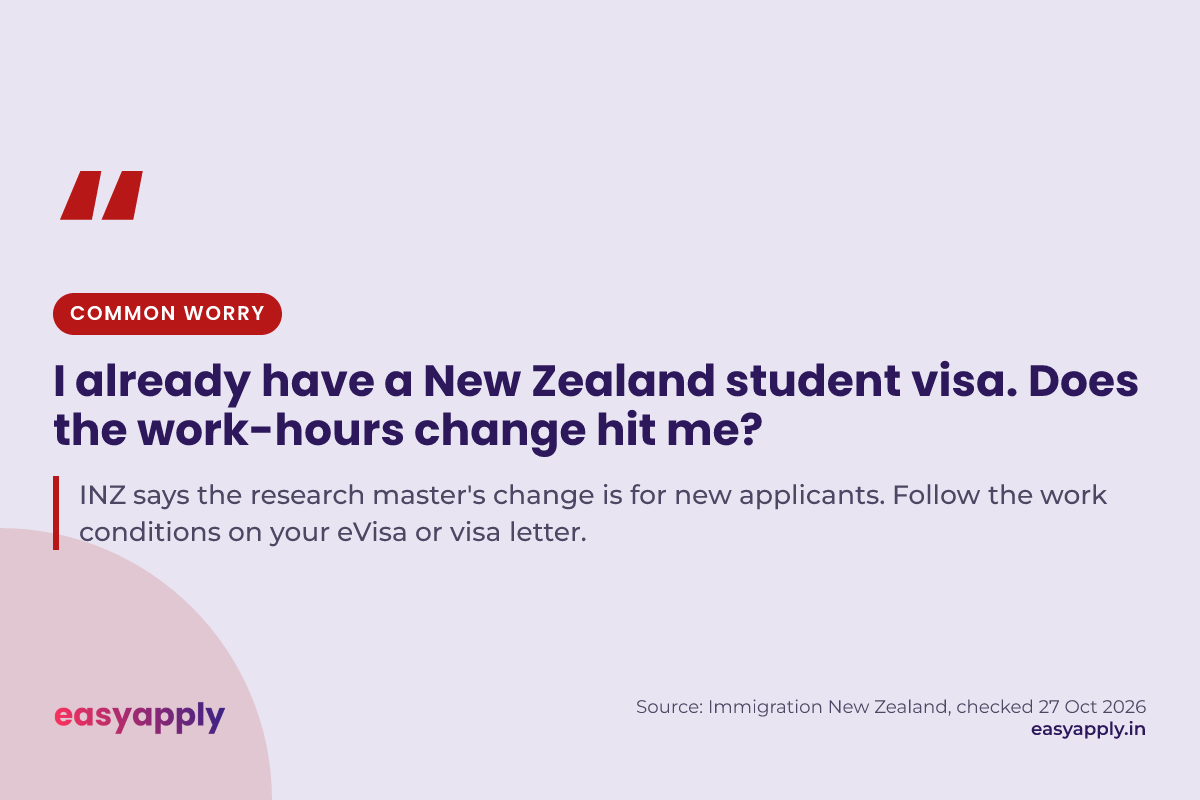
If you already hold a student visa. INZ's work page says the research master's change is for new applicants. Check the work conditions printed on your eVisa or visa letter; those are the rules you must follow.
If you are finishing soon. The extra month gives you more time to decide your next step, such as applying for a Post-Study Work Visa or another visa. Do not leave it to the last week.
For parents
The money. Any plan that assumes a research master's student will work full-time to pay rent or fees needs redoing. Twenty-five hours a week is the ceiling during study, and jobs are not guaranteed.
The college choice. INZ can now pause visa processing while it investigates a provider. Ask the institution plainly whether it is in good standing with New Zealand's regulators, and prefer well-established universities and polytechnics.
The paperwork. Keep honest, complete documents: the offer letter, fee receipts, proof of funds and where the money came from, and English test results. INZ says that false or misleading evidence leads to a decline.
Agents. If anyone promises "full-time work on a student visa" for a master's course, that is no longer true for new applicants.
Key dates
| Date | What |
|---|---|
| 27 Oct 2026 | All four changes took effect |
Sources
- Immigration New Zealand, Changes to student visas (published 27 October 2026): all four changes and the effective date. Checked 27 Oct 2026.
- Immigration New Zealand, Working on a student visa: new applicants for research master's, 25 hours and holiday work, PhD work rights. Checked 27 Oct 2026.
- Immigration New Zealand, Genuine intentions to study in New Zealand: English evidence and honest documents. Checked 27 Oct 2026.
If a calm map of the New Zealand route would help, more on easyapply.in.
Dates can change. Confirm on the official website before you pay or apply.