
UK Study Visas for Indian Students Fall 29%: What the New Home Office Figures Mean for 2027 Plans
Published 27/11/2026
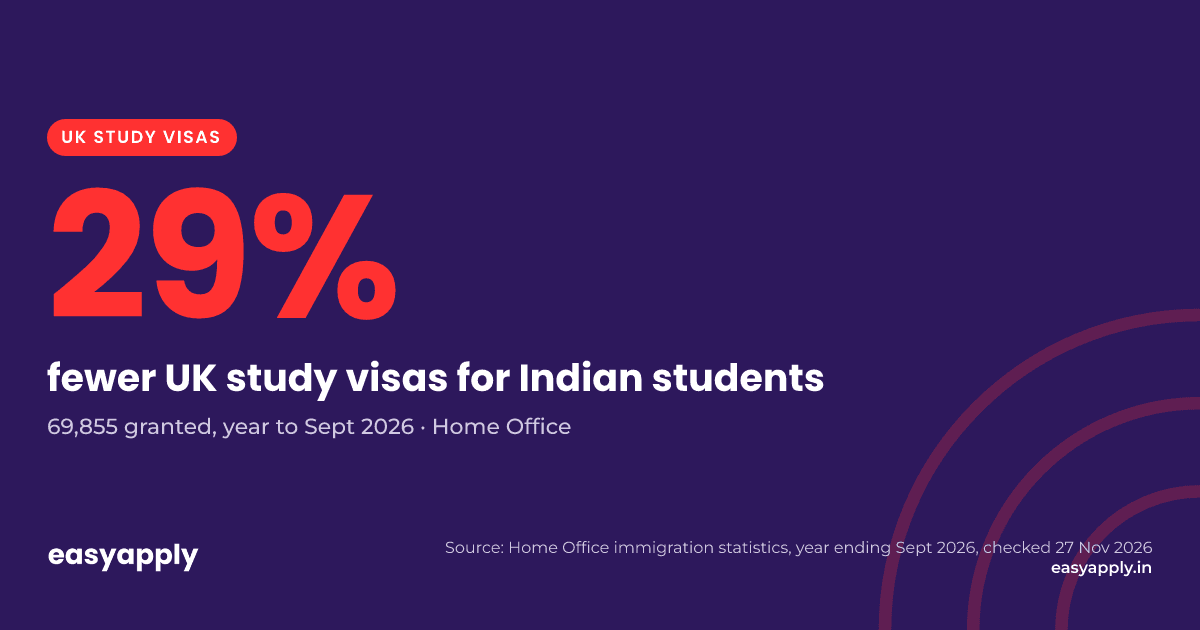
In short: The UK granted 69,855 sponsored study visas to Indian students in the twelve months to September 2026, 29% fewer than a year earlier, according to Home Office figures released on 26 November. India is still the second-biggest source of students after China, but universities now face tighter rules on whom they sponsor, and that matters for anyone applying for 2027.
What happened
Every three months the Home Office publishes official immigration statistics. The new release covers October 2025 to September 2026. On study, it says:
- Fewer study visas overall. 335,801 sponsored study visas were granted, 23% fewer than the previous year and 49% below the peak in the year to June 2023.
- Indian students: down 29%. Indians received 69,855 visas as main applicants, 22% of the total. Chinese students got 80,932 (25%) and Nigerians 19,734 (6%). Pakistan (down 72%), Nigeria (down 34%) and Nepal (down 22%) also fell.
- Master's courses took the biggest hit. 181,920 visas were for master's study, 29% fewer than a year ago, and master's now make up 58% of study visas, down from 63%.
- Very few dependants. Grants to family members of students fell 33% to 13,514, after the January 2024 rule that stopped most students from bringing family.
- Fewer Graduate visas too. Switches into the Graduate route, which lets students stay on to work, fell 31% to 162,881. Indians were the largest group, with 66,552.
The release also explains a reason behind the fall. Since June 2026, universities have had to meet stricter tests to keep their licence to sponsor students: a visa refusal rate below 5%, an enrolment rate of at least 95% and a course completion rate of at least 85%, rising to 90% in June 2027. The Home Office says this, together with its checks that students are genuine, has led some universities to cut back sponsorship in certain countries.
Fewer Indian students. Is a UK admission easier now?
Not necessarily. Universities must keep visa refusals under 5%, and some are cutting sponsorship in certain countries.
For students
- Expect closer checks, not fewer. A university that must keep refusals under 5% will look harder at your marks, funds and reasons for the course before it issues the confirmation (CAS) you need for a visa.
- Ask universities direct questions. Before you accept an offer, ask the admissions office whether it is still sponsoring students from India for your course and intake, and what it needs from you before issuing a CAS.
- Make your story hang together. Your course choice, past studies, work plans and money should make sense side by side. Gaps or a sudden subject switch need a clear, honest explanation.
- Know the Graduate visa change. GOV.UK says a Graduate visa lasts 2 years if you apply on or before 31 December 2026, and 18 months if you apply on or after 1 January 2027 (3 years for a PhD). If you finish a UK degree this winter, check with your university when you can apply.
For parents
- Fewer applicants does not mean an easier route. The rules on universities have tightened, so a genuine, well-documented application matters more than ever.
- Budget for 18 months of work time, not 2 years. Bachelor's and master's students starting in 2027 will graduate under the 18-month Graduate visa, unless the rules change again. PhD graduates still get 3 years. Factor that into how you weigh the cost of a UK master's against job prospects.
- Keep the money paperwork clean. Funds should be in the right account for the right period, with a clear source. A refusal costs fees and time, and it stays on your child's record.
- Be wary of shortcuts. Anyone who promises a "guaranteed" visa or a back-door CAS is a risk to your child. Only the university and UK Visas and Immigration decide.
The new UK numbers, for both of you
- Ask each university how many Indian students it sponsors
- Finishing now? Apply for the Graduate visa by 31 Dec for 2 years
- A genuine, well-documented file matters more than ever
- Plan for 18 months of work time after a master's, not 2 years
Key dates
| Date | What |
|---|---|
| 26 November 2026 | Home Office publishes figures for the year to September 2026 |
| 31 December 2026 | Last day to apply for a 2-year Graduate visa |
| 1 January 2027 | Graduate visas applied for from today last 18 months (3 years for PhD) |
| June 2027 | Universities' required course completion rate rises from 85% to 90% |
Sources
- Home Office, Immigration system statistics, year ending September 2026: Why do people come to the UK? Study: visa numbers by nationality and course level, Graduate route figures and the university compliance thresholds. Published 26 Nov 2026, checked 27 Nov 2026.
- GOV.UK, Graduate visa: how long the visa lasts before and after 1 January 2027. Checked 27 Nov 2026.
Dates can change. Confirm on the official website before you pay or apply.
If a calm look at UK options for 2027 would help, more on easyapply.in when useful.